.svg)
Who Prior Authorization Hurts Most: New Data on Approval Rates and Delays


What the data shows: only 54% of rejected prior authorizations are ever approved
Last month, a team at the Johns Hopkins Bloomberg School published the largest patient-level look at prior authorization for branded medications available to date. Joseph Levy and colleagues followed 205,896 prescription fills that had been initially rejected, covering roughly 157,000 patients across 2024 IQVIA pharmacy data.
Only 54% were ever approved. Of those, 65% took a median of six days to clear, and a quarter waited twelve days or longer.
Who bears the heaviest prior authorization burden
The study found the burden is not distributed evenly:
- Medicaid patients had the highest rate of same-day approvals, but the lowest overall approval rate.
- Women had lower approval rates than men.
- Patients with multiple chronic conditions had lower approval rates than patients with just one.
The administrative weight of prior authorization falls most heavily on the patients least able to push back: those on Medicaid, women, and the chronically ill. These are also the patients who generate the most repeat work for the system that is failing them. The harm and the waste compound each other.
Patients confirm what the claims data shows
A KFF Health Tracking Poll published in February 2026 found the same pattern from the patient side. Asked what creates the largest non-cost burden in healthcare, insured adults named prior authorization above every other category. Among adults with chronic conditions, 39% identified it as their biggest burden, more than twice the share citing any other issue.
Cancer patients face the steepest prior authorization delays
A survey by Bridgette Thom, Fumiko Chino, and colleagues, published in JAMA Network Open, went deeper into one specific population. Of 178 cancer patients with prior authorization experience:
- 69% reported delays in receiving the care their oncologist had recommended.
- 73% of those delays lasted two weeks or longer.
- 22% did not receive the recommended care at all.
- 70% rated the experience as "bad" or "horrible."
The pattern Levy and colleagues describe in claims data is the same pattern these patients describe from inside it.
Why this gap has been hard to see
This is part of the prior authorization story that has been difficult to pin down. Operational data has told us how much time and capital it consumes. Patient stories have told us what it feels like. The quantitative distributional question, across two hundred thousand prescriptions, of who actually walks away without their medicine, has been missing. The reality is uncomfortable.
I do not work inside the operational machinery that produces these numbers. I spend many hours with leaders on both sides of this work who have asked for help, because they are trying to change what these numbers describe. I see it in their operations meetings, in the way harder-to-clear cases stack up, in the patients who do not call back after their second denial. The paper does what data is supposed to do: it makes the pattern impossible to keep ignoring.
What this means for healthcare organizations
The companies earning durable enterprise value in healthcare are the ones that finish the work end to end, not the ones that speed up one step and leave the patient to chase the rest. The patients who benefit when the work gets finished are not the same patients who benefit when success is measured by average processing time alone. We have measured the average but missed the distribution, and the human reality it hides.
Closing the gap between approval and care
Speeding up one step of prior authorization does not help the patient who still has to chase the rest of the process alone. Ascertain was built to close that gap end to end, combining embedded AI with human follow-through so cases do not stall out with the patients least equipped to push back.
At The Oncology Institute, that approach took prior authorization from 350 staff hours a week to under 10, with a 95%+ first-pass approval rate. At Northwell Health, it meant 67% faster submission times and 80% fewer clicks per authorization.
If you're a speciality practice looking at where your own approval and delay numbers fall on this distribution, we'd welcome the conversation. Reach out to Ascertain to talk through what closing that gap could look like for your patients.
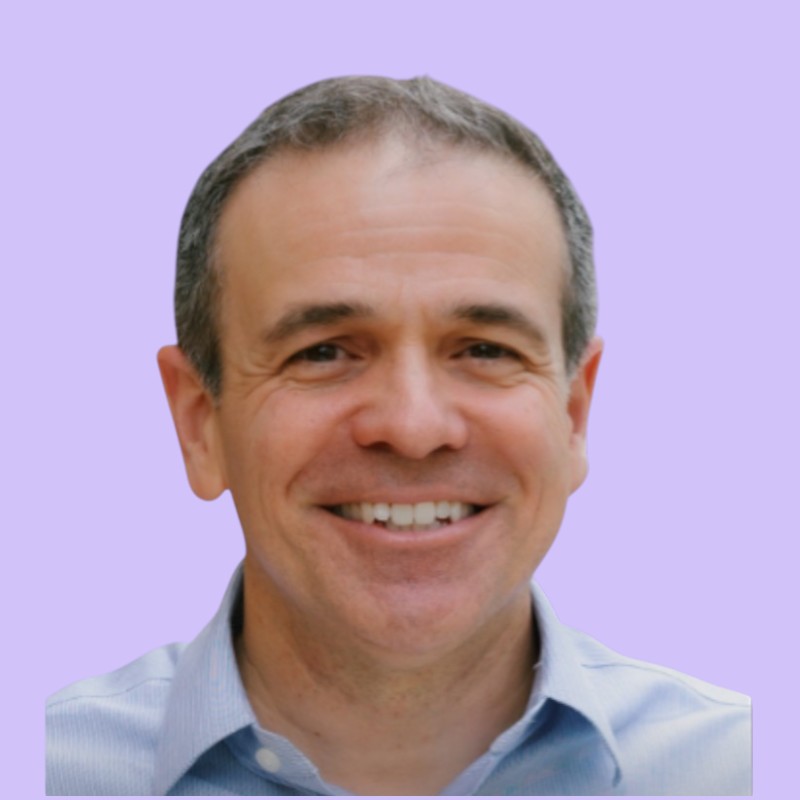
"Our partnership with Ascertain reflects TOI’s ongoing focus on operational excellence and efficiency. We’ve seen how thoughtfully applied automation can simplify complex tasks and allow our staff to focus more of their time on supporting patients. This first implementation went live in only eight weeks, and we look forward to continuing to build on that progress with Ascertain’s team."

Daniel Virnich
.svg)
Facts
Lorem ipsum dolor sit amet, consectetur adipiscing elit, sed do eiusmod tempor incididunt ut labore et dolore magna aliqua.
.webp)
.jpg)